The challenge is bigger than security
Enterprise data is not uniform. Contracts, HR information, technical documents, customer records and strategic knowledge do not carry the same risk. AI adds a new layer: users can paste sensitive content, agents can combine sources, and generated answers can reveal relationships that were never meant to be exposed.
Standards are starting to frame the issue
ISO/IEC 42001 defines requirements for establishing, maintaining and improving an AI management system. It is not only a technical checklist; it formalizes policies, roles, risk evaluation, lifecycle management and continuous improvement around AI systems.
ISO 27001 remains relevant for information security, but AI adds questions around data quality, outputs, human oversight, model selection and supplier control.
What AI governance must decide
- which data can be used for each use case;
- which AI tools are approved;
- which logs are retained;
- how access rights apply inside RAG;
- who validates models and changes;
- how a disputed answer can be audited.
How OPA helps
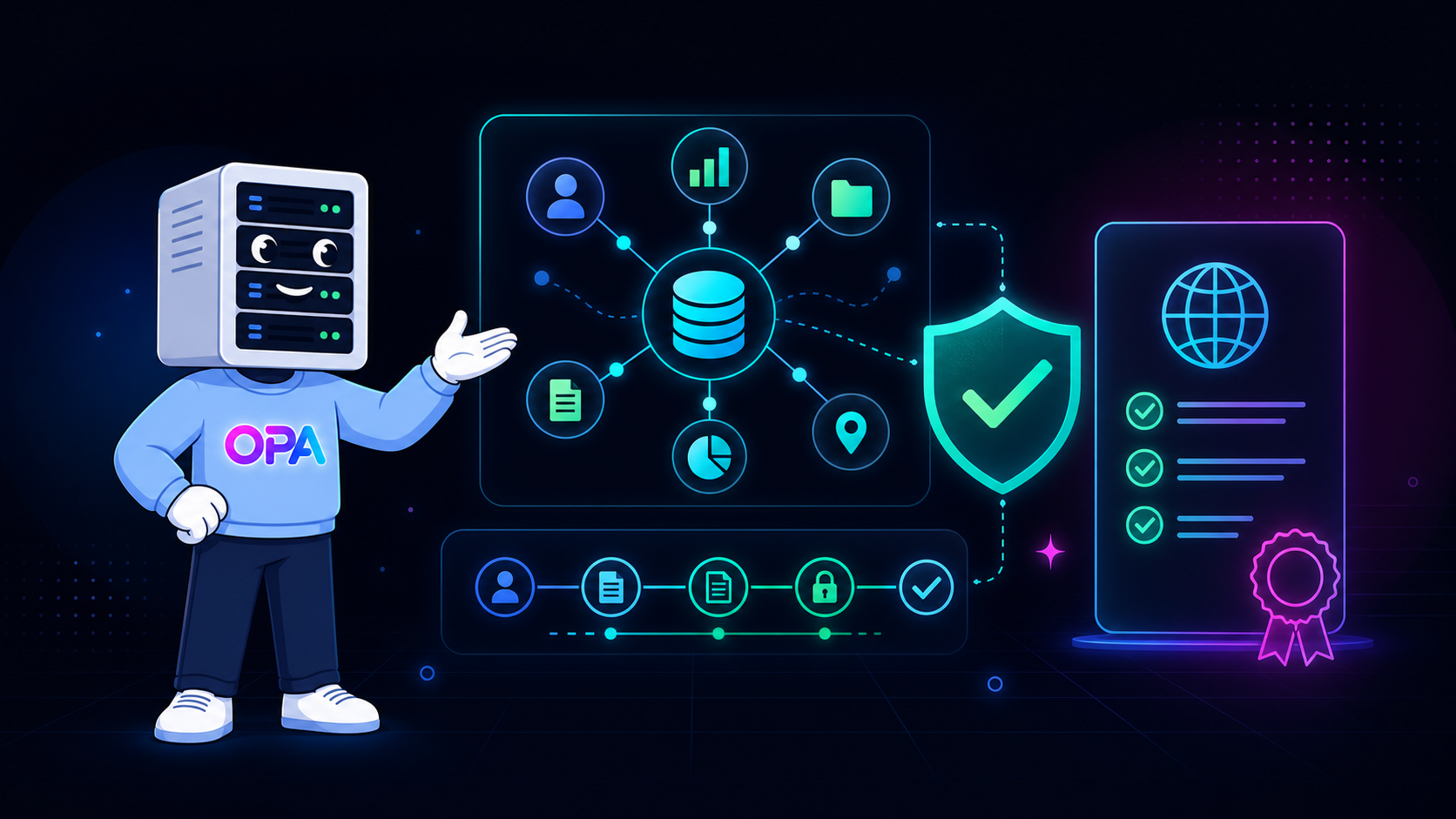
OPA does not replace governance; it gives governance a controllable technical base. By hosting inference, RAG and document flows on private infrastructure, companies can apply access rules, reduce data exposure, trace usage and avoid scattered personal tools or unmanaged APIs.
Conclusion
AI data governance is becoming structural. Standards such as ISO/IEC 42001 show the direction: AI must be managed, documented and controlled. OPA provides the local infrastructure to make that control practical.
Discuss AI governanceSources: ISO/IEC 42001, AWS Security Blog on ISO/IEC 42001, Microsoft Learn ISO/IEC 42001.