
Energy demand is becoming visible
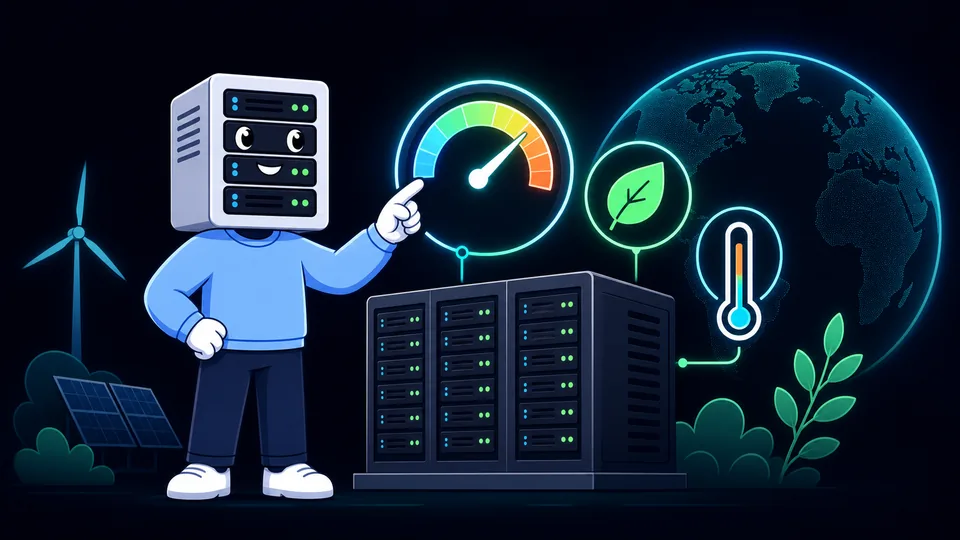
The International Energy Agency estimates that data centers consumed around 415 TWh in 2024, about 1.5% of global electricity consumption, with fast growth in recent years. AI adds pressure through model training, inference, agents, retrieval and massive query volume.
This matters for companies because AI is no longer just another digital service. It can become a permanent work layer: document search, internal support, code copilots, contract analysis, meeting summaries and agent automation. When those uses scale, energy is no longer a topic reserved for large labs. It becomes part of the way each organization chooses its AI architecture.
The problem is also local
A data center can be efficient globally while creating local constraints: grid connection, water availability, heat, noise, social acceptance and energy mix. The climate debate is not simply cloud versus local; it is about sizing, placing and powering AI workloads responsibly.
For a company, this means moving beyond an abstract view of cloud. Cloud gives access to impressive capacity, but that capacity exists somewhere, on real infrastructure. A private AI server also exists in a concrete place: an office, a technical room, a building powered by an identifiable energy contract. In both cases, the right question is not only where computation is possible, but where it is relevant, measurable and controllable.
How private inference can help
OPA does not claim to remove AI’s energy impact. But properly sized local infrastructure can align capacity with real need, avoid unnecessary calls, choose the available energy strategy and make consumption visible. Stable internal load can be measured and optimized more directly than scattered cloud usage.
The difference is that the company regains a capacity to steer. It can choose smaller models when the task does not require a giant model, schedule some processing, cache answers, optimize embeddings and adapt infrastructure to real usage. Efficiency comes less from a “local versus cloud” slogan than from a better fit between workload, model and place of computation.
Energy questions to ask
The economic question therefore starts with the real workload. A company has to understand which AI use cases are genuinely recurring, what level of server utilization can be expected, which energy source will power inference, which models are sufficient without oversizing the hardware, and which tasks can be cached or scheduled instead of being computed repeatedly on demand.
This analysis avoids two opposite mistakes: externalizing every AI workload without visibility on the energy and financial bill, or buying local infrastructure that is too powerful and remains underused. The right balance may be hybrid. Some occasional or highly specialized workloads will remain in the cloud; others, more frequent and sensitive, may benefit from running closer to the company.
Conclusion
The climate challenge of AI requires moving out of abstraction. OPA makes part of inference visible, measurable and governable at company level.
Size controlled AI infrastructureSources: IEA, Energy demand from AI, IEA, Energy and AI executive summary, Axios on Google AI energy and emissions.
Tom Cheniaux - rephrased using AI