
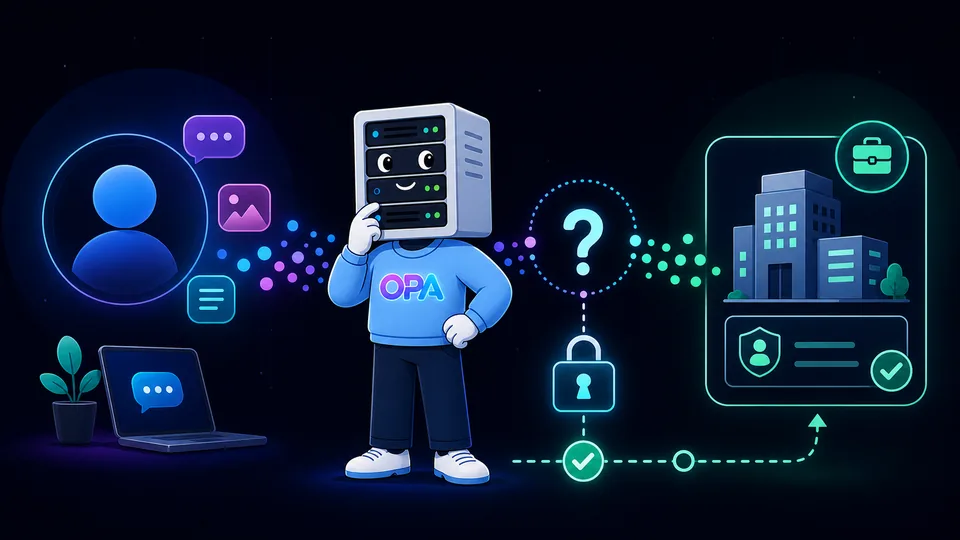
Who controls the contract and settings?
With personal accounts, the company may not control retention settings, contract terms, traceability, user identity or account removal. Enterprise licenses exist to address some of this: central administration, privacy settings, security controls, access management and more appropriate contractual commitments.
This difference between personal accounts and enterprise licenses is fundamental. A professional license may offer better guarantees, administration controls, confidentiality commitments and clearer user management. But it is not sufficient on its own. If teams multiply tools, extensions, connectors and experiments without a shared framework, the company remains exposed to dispersed data and responsibilities.
Enterprise plans reduce risk, but governance still matters
OpenAI states that data from Business, Enterprise, Edu and API products is not used to train models by default. That distinction matters. But an enterprise license does not decide which data can be pasted, who may connect AI to internal documents, or how generated answers are reused in business workflows.
The topic becomes more sensitive when AI connects to internal documents. A simple conversational assistant then becomes an entry point into contracts, procedures, customer information or business knowledge. The risk is not only direct leakage of a file; it is the recombination of sensitive information through generated answers, sometimes difficult to audit if the architecture was not designed from the start.
Questions to ask before scaling
The first questions are operational rather than abstract. Companies need to know whether users work through personal or professional accounts, whether prompts and answers are logged, which data categories are forbidden, who may connect AI to internal documents, how departing users are disabled, and what commitments exist around training, retention and support.
These questions should be asked before large-scale adoption, not after. Once a tool is already used everywhere, it becomes harder to reverse course. Habits are formed, documents have circulated and workflows may depend on tools that were never properly validated. A progressive but structured approach avoids this governance debt.
The role of private infrastructure
OPA adds a complementary option: run sensitive use cases on private infrastructure. Enterprise SaaS accounts can remain useful, while strategic documents, internal workflows and sensitive knowledge bases can be processed locally under company rules.
For an SME, this approach avoids turning AI into an accumulation of individual accounts. It creates a shared base where uses are documented, models identified, access controlled and costs more visible. The goal is not to slow adoption, but to make it sustainable.
Conclusion
The real question is not only whether the tool is trustworthy. It is whether the company truly controls usage, data and access. OPA helps recover that control for sensitive workloads.
Define an internal AI policySources: OpenAI Enterprise Privacy, OpenAI data usage policy, Cyberhaven on enterprise generative AI risks.
Tom Cheniaux - rephrased using AI